Best Emergency Vet Care to Know During National Pet Week
Every May, National Pet Week (May 3–9, 2026) gives pet owners a moment to pause and take stock of something easy to delay: being genuinely prepared for a pet health emergency.
The week, created by the American Veterinary Medical Association (AVMA) in 1981, has always focused on practical action. This year, one of its core themes lands especially close to home: Emergencies happen. Be prepared.
For new pet parents and seasoned owners alike, that preparation starts with knowing the difference between a situation that can wait until tomorrow and one that cannot wait an hour.
Understanding that line, before you are in the middle of a scary moment, can make all the difference for your pet.
Here is what veterinary professionals recommend every pet parent understand before a crisis arrives.
1. Know the red-flag signs that demand immediate attention
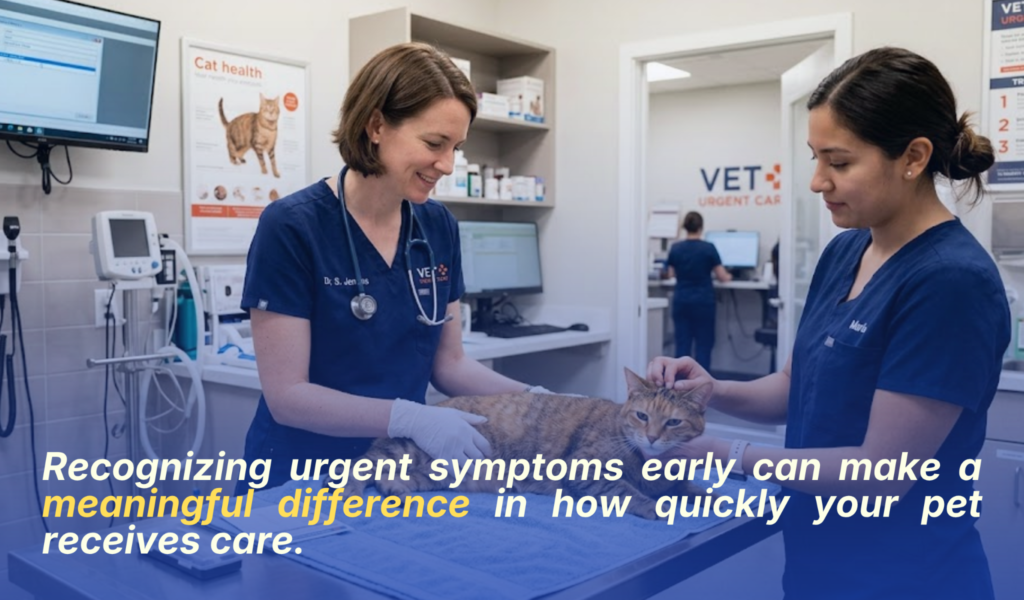
The AVMA lists 13 animal emergencies that require immediate veterinary consultation or care.
According to vets at Denver animal emergency at Sploot Veterinary Care, several of these situations are seen with regularity, and early recognition by pet owners is often what determines the outcome.
The following signs in dogs or cats should prompt you to seek veterinary care urgently, without waiting to see if things improve on their own:
- Breathing difficulty: labored breathing, open-mouth breathing in cats, extended neck posture, or blue/gray/pale gums are all signs that oxygen delivery may be compromised.
- Repeated vomiting or retching: a single episode may pass, but ongoing vomiting, especially with lethargy, blood, or a distended abdomen, can signal a serious internal condition.
- Suspected toxin ingestion: common household dangers include xylitol, grapes and raisins, chocolate, ibuprofen, acetaminophen, certain plants, and rodent bait. Do not induce vomiting unless a veterinarian specifically instructs you to do so.
- Seizures: if your pet has a seizure for the first time, or if a seizure lasts longer than a few minutes, contact a veterinarian immediately.
- Collapse or extreme weakness: sudden inability to stand, extreme lethargy, or loss of consciousness warrants urgent evaluation.
- Uncontrolled bleeding: bleeding that does not slow within five minutes of applied pressure is a medical emergency.
- Suspected urethral obstruction (especially in male cats): inability to urinate combined with straining, crying, or hiding can be life-threatening within hours.
As a general rule, the AAHA recommends that if you are uncertain whether your pet’s condition is serious, call your veterinarian.
Hesitation when a pet is displaying distress signals can allow a manageable condition to become a critical one.
2. Understand the difference between urgent care and emergency care
Not every concerning symptom requires a trip to a 24/7 emergency hospital. Veterinarians distinguish between two levels of need that are easy to confuse:
Urgent care covers situations where your pet is unwell but stable, and where same-day assessment is important but the condition is not immediately life-threatening. This may include: vomiting or diarrhea that persists, limping with pain, ear infections causing visible discomfort, minor wounds, or a sudden but non-severe change in behavior.
Emergency care is needed when a pet’s condition is deteriorating rapidly or when vital functions, such as breathing, circulation, or neurological function, are compromised. These cases often require stabilization, advanced diagnostics, and continuous monitoring.
Clinics operating with extended hours and same-day access, are equipped to assess whether a pet’s condition needs immediate stabilization or can be managed with treatment and monitoring. For pet owners who are unsure which category their pet falls into, calling the clinic directly for triage guidance before arriving is always a sound first step.
3. Build a pet emergency plan before you need one
One of the most consistent observations from urgent care teams is that pet owners who arrive prepared move through triage faster and receive care more quickly.
Preparation does not require anything complicated. It requires a few deliberate steps taken before a problem arises.
National Pet Week is a practical time to complete these:
- Save your nearest same-day clinic and 24/7 emergency backup in your phone, along with their addresses. Note which is open on weekends and which handles after-hours care.
- Create a pet medical summary that includes your pet’s current medications (name, dose, and schedule), known allergies or health conditions, vaccine history, microchip number, and approximate weight.
- Know your route to both your primary vet and the nearest emergency clinic. Traffic patterns and clinic operating hours can vary, and knowing your options in advance reduces decision fatigue during a stressful moment.
- Keep a basic pet first-aid kit at home. Recommended contents typically include gauze, vet wrap, saline solution, a digital thermometer, blunt scissors, disposable gloves, and a clean towel or blanket for transport.
- Record a short video if your pet is displaying an intermittent symptom. Veterinary teams frequently note that a 10- to 20-second clip of a breathing episode, limping pattern, or seizure-like behavior helps with triage far more than a verbal description alone.
4. Use National Pet Week to schedule a wellness visit
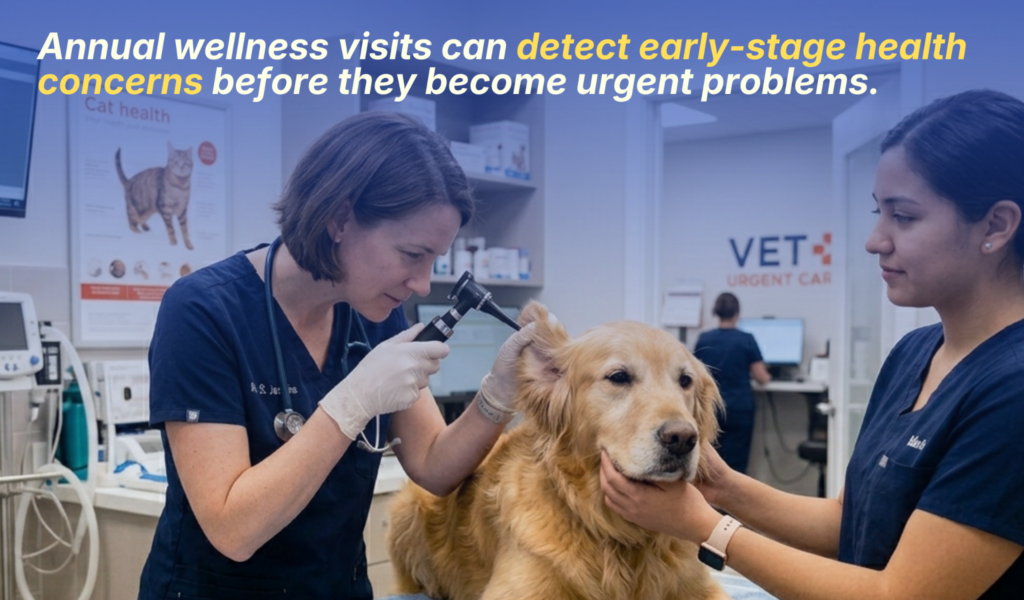
One of the AVMA’s central messages during National Pet Week is a straightforward one: see your vet. Preventive care is not simply about vaccines and parasite prevention. Annual wellness exams allow veterinarians to establish a baseline for your individual pet, making it easier to detect subtle changes in weight, organ function, dental health, or behavior over time.
Many of the conditions that become urgent care situations, including dental disease, early kidney disease, and obesity-related joint problems, can be identified and managed earlier when pets receive consistent preventive care. For new pet parents especially, a wellness visit is also an opportunity to ask about nutrition, appropriate exercise, behavioral health, and what to watch for as your pet ages.
Sploot Veterinary Care, which operates across the Denver metro area, integrates primary and urgent care under one roof with same-day availability. Their model is built around making routine preventive visits as accessible as urgent walk-ins, so that fewer routine concerns become emergencies.
5. Know what to tell the vet when you arrive
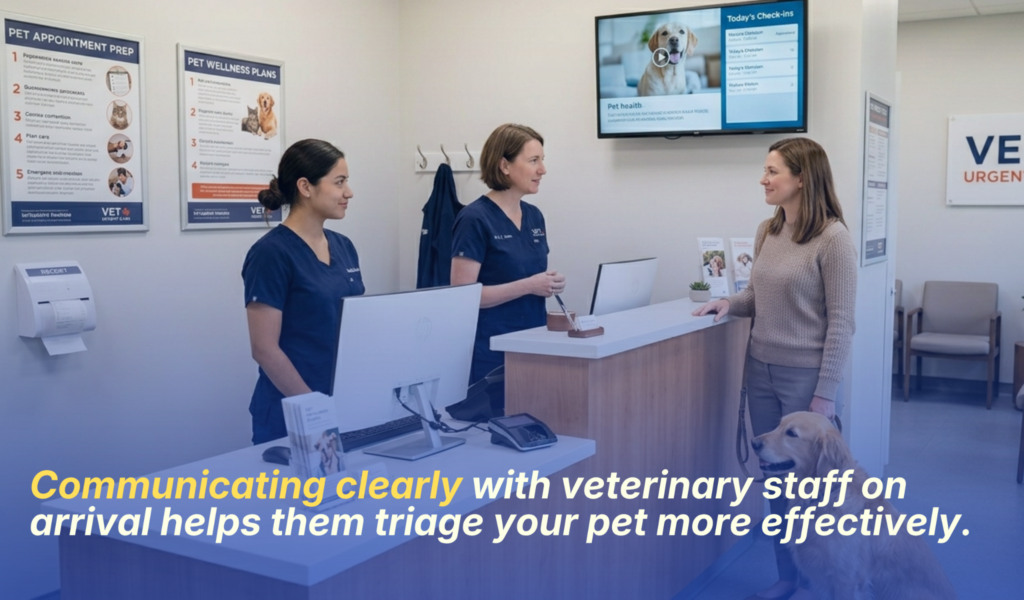
Veterinary triage teams work most effectively when pet owners can provide clear, concise information quickly. The information that helps most at check-in includes:
- When the symptom started (a specific time, if possible)
- What changed from your pet’s normal baseline (energy, appetite, posture, bathroom habits)
- Any medications or supplements your pet has received, including dose and timing
- What your pet may have eaten, chewed, or been exposed to
- A brief video of the episode, if you were able to record one
You do not need to arrive with a diagnosis. The veterinary team will determine that. What helps them most is a clear picture of what changed, when it changed, and what your pet looked or sounded like at the time.
6. A quick-reference triage guide for pet parents
The following is a general guide based on commonly cited veterinary triage principles. Every pet is different, and this is not a substitute for professional assessment. If you are uncertain, err on the side of calling your clinic.
| Seek care urgently / call immediately | Same-day evaluation is advisable |
| Difficulty breathing, blue/gray gums | Vomiting or diarrhea lasting more than 12 hours |
| Collapse, extreme weakness, unresponsiveness | Limping with visible pain or swelling |
| Seizure (first-time or prolonged) | Ear infection with significant discomfort |
| Suspected toxin ingestion | Sudden appetite loss with mild lethargy (monitor closely) |
| Uncontrolled bleeding or major trauma | Minor wound that may require assessment |
| Suspected urethral obstruction in male cats | Behavior change without other red-flag signs |
Final note for pet parents
National Pet Week is a reminder that care does not have to wait for a crisis to become thoughtful. Booking a wellness visit, saving your emergency clinic contacts, and reviewing the red-flag signs your pet should never display without veterinary attention are all small actions that add up to meaningful protection.
The pet owners who navigate emergencies most effectively are typically not the ones with perfect knowledge. They are the ones who acted early, communicated clearly, and did not wait to see if things resolved on their own when something felt genuinely wrong.
This National Pet Week, take 20 minutes to build your emergency plan. Your pet will not know you did it. But it is one of the most practical ways to show that you are paying attention.